

Reviewed by the Palmako UK content team with insights from our garden building experts.
In the 1930s, when fibreglass was first introduced as home insulation, it was hailed as a great advance in home building1. Fast forward to the modern age, with its highly advanced insulation materials, and it’s still a lifesaver for homes - especially log cabins. There are, however, two problems you’ll have to get around: It's a big job, and the bill can be hefty.
If log cabin insulation is a necessity, is there anything you can do to work around the effort of it, and keep down the bill? The solution begins with using easy-to-install materials and careful planning. If you’re interested in the full answer, keep reading 👇
Were you actually looking for shed insulation? If so, ‘How to Insulate a Shed for Year-Round Protection’ has all the information you need.
Quick Overview
To insulate a log cabin, you need to seal gaps, add insulation, cover with a vapour barrier to prevent condensation, and finish with interior cladding. Common insulation includes mineral wool, fibreglass batts, rigid foam boards, and spray foam. This creates year-round comfort, reduces energy bills, controls moisture, and decreases noise levels.
Table of Contents
- Affordable insulation materials: Cost summary
- Seal the gaps: The foundation to good insulation
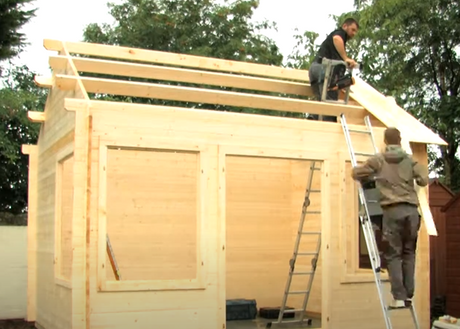
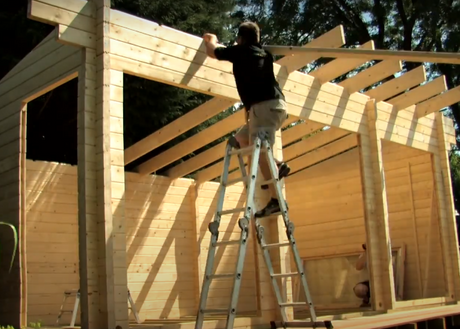
- Log cabin roof insulation
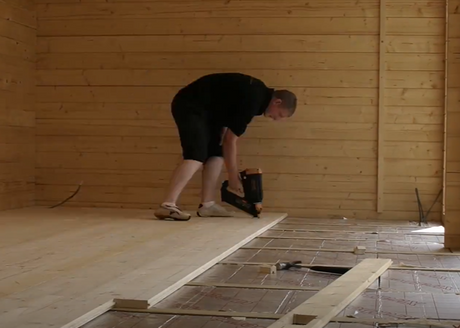
- Log cabin floor insulation
- Log cabin wall insulation
- Interior cladding: The final layer
- Conclusion
- FAQs: How to insulate a log cabin
Affordable insulation materials: Cost summary
|
Material |
Typical Use |
Cost per m² |
Value summary |
|
Fibreglass |
Walls, roof |
£5–£10 |
Cheapest overall, DIY friendly |
|
Mineral wool |
Walls, roof, floor |
£8–£15 |
Better sound absorption |
|
Multifoil |
Roof, walls (additional layer) |
£3–£4 |
Boosts the performance of cheaper materials |
|
PIR boards |
Walls, roof, floor |
£12–£20 |
Highest performance overall |
|
Vapour barrier |
All areas |
£1–£3 |
Critical in a timber cabin for preventing condensation |
|
DPM (floor) |
Floor |
£1–£2 |
Moisture protection |
Seal the gaps: The foundation to good insulation

The first step in making the most of your insulation materials is to seal all gaps in your home. Gaps can occur due to structural damage, uneven surfaces, and general wear and tear. Proper insulation is all about the work you do before the first panel, board, or roll can be laid. Pay meticulous attention to cracks, door frames, and window gaps, especially if you want to keep out cold air and lower heating costs.
Check the following areas to ensure you cover all the bases:
- Corners where logs join - even if your cabin walls are composed of interlocking logs.
- Windows and doorframes.
- Cabin base and floor edge.
- Nail holes or knots that have loosened.
- Timber settlement gaps widen over time.
Affordable gap-sealing materials
- Silicone caulk - excellent for narrow gaps.
- Expanding foam - for larger gaps (use sparingly)
- Weatherstripping tape for draughty doors and windows.
- Timber filler for cosmetic gaps
Material costs for sealing your cabin will be between £20 - £250 (depending on the size of the cabin).
Expert tip: Install windows with double glazing if your budget allows. Double glazing uses two panes of glass with an air-filled gap to provide superior insulation. A large number of Palmako timber cabins come with double-glazed windows and doors, helping you save energy costs from the start. View the full catalogue of garden rooms.
Log cabin roof insulation

As heat rises, 25% heat is lost through the roof in an uninsulated timber cabin roof. Fortunately, it is one of the most affordable and effective places to add insulation for energy efficiency. Think of it as a woolly hat for your home.
Once your roof boards are in place, adding thermal insulation such as mineral wool creates a protective barrier that keeps the heat inside. Seal every joint with foil tape to improve overall performance.
Affordable roof insulation
- Fibreglass rolls or batts - £5–£10 per m²
- Mineral wool (rock wool) - £8–£15 per m²
- PIR rigid foam boards - £12–£20 per m²
Install the insulation between the rafters, and then a breathable membrane on the warm side. This will allow moisture to rise from inside the cabin (from the kitchen or bathroom) but prevent external moisture from entering.
Log cabin wall insulation

Solid timber walls already offer some degree of insulation against weather conditions; however, internal insulation also holds many benefits. It can drastically reduce energy bills in the colder months and make the cabin suitable for year-round use.
Best value wall insulation options
- PIR rigid boards - £5 – £15 per m²
- Mineral wool rolls - £8–£15 per m²
- Damp proof membrane (DPM) - £1–£2 per m²
- Polystyrene board - £10–£12 per m²
Insulating log cabin walls requires you to build a 25–50 mm stud frame and install the insulation between the studs. The damp proof membrane should be placed on the cold side of the installation (directly against the timber). If you opt for foil-backed insulation boards, they should go on the warm side of the installation.
Log cabin floor insulation

Log cabins can lose a tremendous amount of heat through their floors - on average 10 - 15%. A cabin with a fully insulated floor will reduce energy bills, prevent cold drafts from beneath the floor, and improve noise insulation.
Insulating the floor is the easiest of the three insulation tasks and can be quickly accomplished with the right tools and a few Google searches.
Low-cost floor insulation choices
- PIR floor boards - £5-£15 per m²
- PUR floor boards - £5-£15 per m²
- Cork boards - £17-£22 per m²
- Mineral wool - £8-£15 for 10m²
Remove the cabin floorboards to reveal the small gap underneath. Cut your insulation boards or wool to size, and fit snugly in the joist gaps. Once in place, use foil tape to seal gaps and keep the insulation in place. Finally, put back the cabin floorboards.
Make your entire cabin last longer by treating it well. In ‘How Long Do Log Cabins Last?’ We will show you how to increase the longevity of your cabin.
Interior cladding: The final layer

Once the insulation and moisture-proof membrane are in place, internal cladding is the finishing touch on your work. Not only does cladding hide the insulation, but it also strengthens the internal structure. A well-chosen cladding material can transform the interior of your cabin, turning a beautiful wooden frame into a spectacular home.
Popular options for cladding
- Oriented strand board (OSB board)
- Plywood sheets
- MDF boards
- Tongue-and-groove boards
When choosing your cladding, consider how the cabin will be used. A home might benefit from lighter colours and smooth textures, while a gym, studio or office will need more durable materials. A well-clad interior not only enhances the aesthetics of your cabin and your comfort but also increases the longevity of the structure.
Why stop at the cladding? Complete the look of your log cabin with: ‘ What to Put in a Summer House: Budget-friendly Ideas’
Total insulation cost breakdown: Estimates
|
Small-sized cabin (≈10 m²) |
Medium-sized cabin (≈20-25 m²) |
Large-sized cabin (≈30-35+ m²) |
|
|
Walls |
£150–£400 |
£300–£900 |
£600–£1,500 |
|
Roof |
£150–£400 |
£400–£900 |
£600–£1,400 |
|
Floor |
£100–£300 |
£200–£600 |
£300–£1,000 |
|
Vapour barrier, tapes, fixings |
£50–£100 |
£100–£150 |
£150–£250 |
|
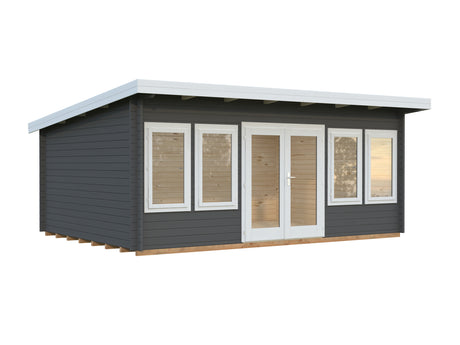
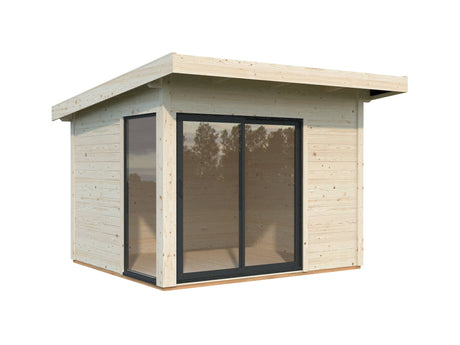
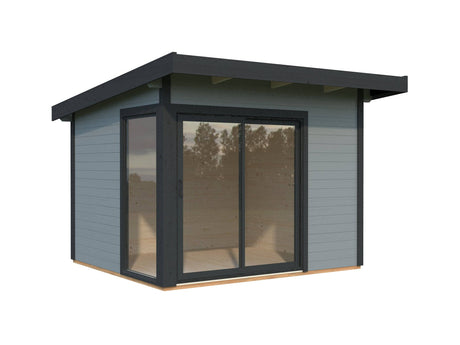
Visualise the cabin size |
|
||
|
Total |
£500–£1,300 |
£1,000–£2,500 |
£7,000–£10,000+ |
Conclusion
As we bring our discussion on ‘How to insulate a log cabin’ to a close, we believe you’re equipped with all the information you need to do this work easily and within your personal budget. The value of insulation is:
- A reduction in energy costs.
- An increase in the longevity of your log cabin.
- Helps maintain a comfortable interior by blocking both hot summer air and winter chills.
Insulating your log cabin is one of the smartest investments you can make. With these steps in hand, you can create a space that works for you, all year round, and if you’re in the market for a new timber cabin, this Buyer’s Guide will give you ten tips for buying the best timber garden room.
FAQs: How to insulate a log cabin
1. What is the cheapest insulation for a log cabin?
Fibreglass or mineral wool batts are the cheapest option for a log cabin. They have the lowest upfront cost per square metre and are excellent for filling wall cavities. For their cost, they provide strong thermal performance.
2. Do I need a vapour barrier for my log cabin?
Yes. Vapour barriers are essential for timber buildings. Without one, moisture can accumulate in log cabin walls and roofs, causing mildew, rot, and timber swelling. They also prevent warm indoor air from entering the insulation and condensing on cold surfaces.
3. Why should I insulate my log cabin floor?
Floors are a major source of heat loss, especially in timber buildings built on raised timber bases. By adding PIR boards or mineral wools between floor joists, the cabin is protected from rising moisture on the ground. Properly insulated floors are more energy efficient, saving on heating and cooling costs.
4. Can I insulate my log cabin from the outside?
Yes, it is possible to insulate the cabin from the outside, but the cost is significantly higher than interior insulation. It could involve removing exterior cladding and sometimes altering roof overhangs. This is more complex than installing interior insulation.
5. How long does log cabin insulation last?
Common insulation materials such as fibreglass, mineral wool, and PIR boards last between 15-40 years. Spray foam insulation (especially closed-cell types) can last up to 50 years. The quality of the insulation will determine the product's lifespan.
6. Will insulation help with noise reduction?
Yes, materials like mineral wool and dense fibreglass absorb sound vibrations well. For managing reverberations and echoes within a room, use acoustic foam or panels. While insulation does reduce internal echo and external noise, it is not completely soundproof.
References: