

This article was reviewed by the Palmako UK editorial team, with input from garden building specialists who understand UK regulations, timber construction, and outdoor living design.
While most seniors in the UK live either alone in private accommodation or in care homes1, the trend towards multi-generational homes is increasing. New research has revealed that 49% of Britons are embracing this way of living, which represents a significant shift in how people live2.
It is this shift that has increased demand for additional living space - often in the form of a granny annexe or garden room - for older family members. In this guide, we provide an in-depth look at creating this extra space and offer a cost-effective solution for building a granny annexe.
Quick Overview
A granny annexe is a self-contained living space built on the grounds of a main house, but not classified as a separate dwelling. It is most commonly designed for family members or elderly relatives. Sometimes referred to as a ‘granny flat’, it has a bedroom, kitchen, bathroom and living room. Planning permission is required before you can erect it, since it is self-contained accommodation.
Table of Contents
- What qualifies as a granny annexe?
- What do authorities consider when approving a granny annexe?
- Planning permissions and building regulations for a granny annexe
- Modern granny annex ideas
- Final Thoughts
- FAQs: What is a granny annexe?
What qualifies as a granny annexe?

Any self-contained living space that is specifically built for a dependent or related family member is classified as a granny annexe. The distinction isn’t about the aesthetics, but rather how the structure will be used. While it can be a separate building, it is legally part of the main property.
A qualifying annexe should offer all the essentials for daily living: a bedroom, bathroom, kitchen, and living room. Additionally, it can also have a small patio. It usually has its own entrance, allowing elderly relatives to live semi-independently. However, there are some shared facilities such as water, sanitation, postal address, and garden space.
Looking for a ready-to-install, beautifully crafted granny annexe? Explore Palmako’s garden room collection for high-quality, well-constructed, and attractive options perfect for family living.
What do authorities consider when approving a granny annexe?
Local authorities look at who is going to live in the annexe. It has to be a family member, not a private tenant. This is one of the reasons it is not classified as a full self-contained living space, which triggers its own planning permissions and tax obligations.
Two factors play a role in approving a granny annexe:
- Whether it’s sitting within the curtilage of the property (the recognised domestic border).
- Whether it’s genuinely ancillary to the main house, meaning it is supportive and subordinate to the lifestyle of the main property.
- Shared services such as water connected to the primary system, and electricity connected to the main fuse board.
Council teams love clarity, so any vague explanations for the use of the building will create red flags. However, if it meets the basic criteria described here, it should qualify without restrictions.
📑 A Palmako Insight
For further information on annexes, including costs: What is an annex building? Key facts you should know.
Planning permissions and building regulations for a granny annexe

Planning permission is generally required for a granny annexe because it is a self-contained living space. This is true whether the annexe is attached to the primary residence or a short distance from the main property.
Workaround for granny annexe: How to avoid planning permission
To get around planning permission, you can use the Caravan Sites Act 1968. This act provides for a structure to be erected without planning permission if it is classified as a caravan or mobile home, and is ancillary to the main dwelling. Key requirements under the act are:
- It is capable of being moved by road (even if it is assembled on site, it must be transported as one unit after assembly).
- It does not need to have wheels, but it cannot be permanently fixed to a foundation (like a traditional brick building).
- It can be no more than 20m in length, 6.8m in width, and 3.05m internal height.
- It must be ancillary to the primary residence and occupied by a family member.
Building regulations deal with the installation of water, electricity, and sanitation services in the structure. These regulations are set by the local government and published on the government’s website. For example, regulations that could apply to a granny annexe in England are:
- Sanitation, hot water safety and water efficiency: Approved Document G
- Electrical safety: Approved Document P
- Fire safety: Approved Document B
- Ventilation: Approved Document F
- Drainage and waste disposal: Approved Document H
- Access to and use of buildings: Approved Document M
Modern granny annexe ideas
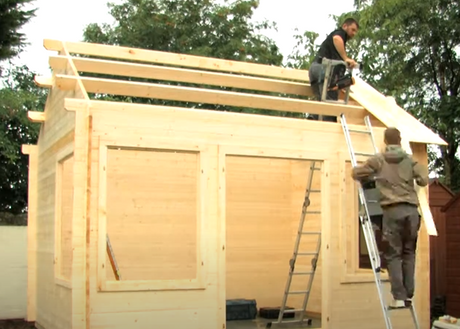
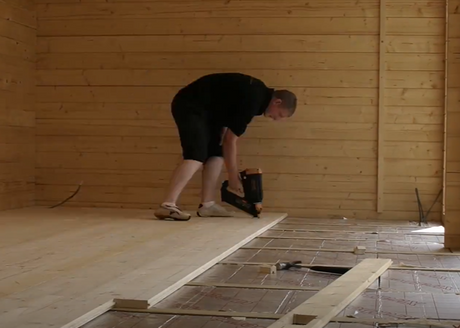
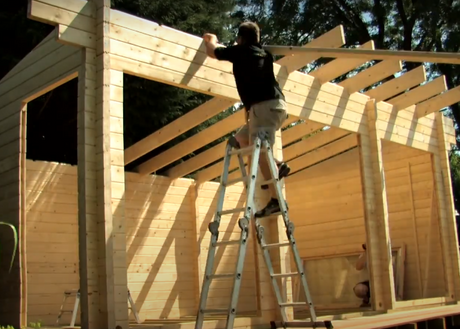
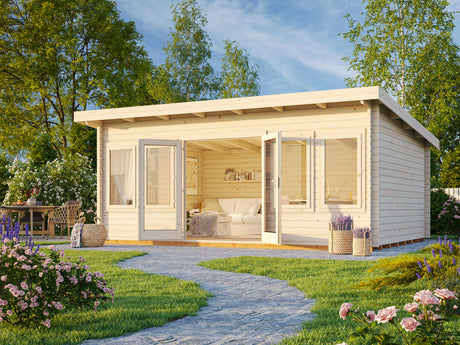
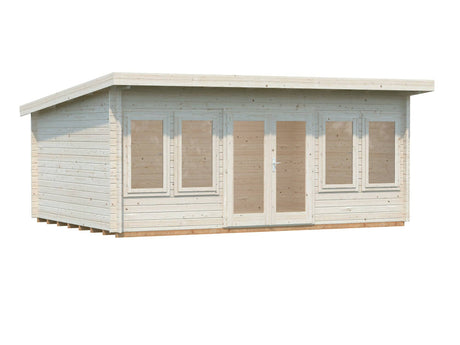
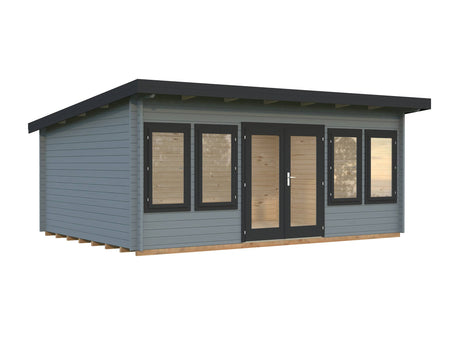
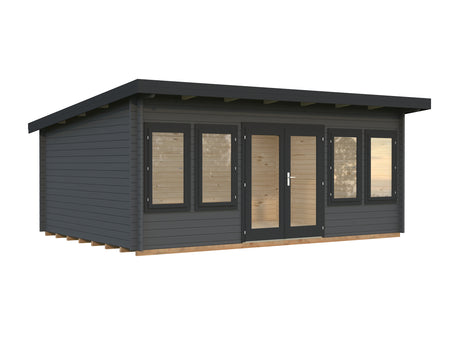
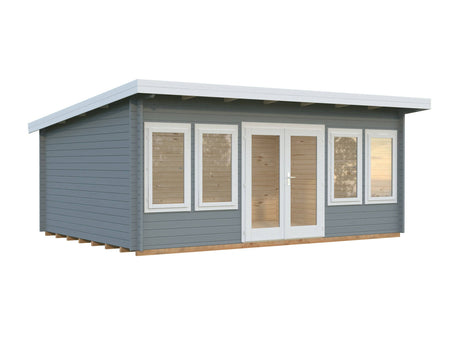
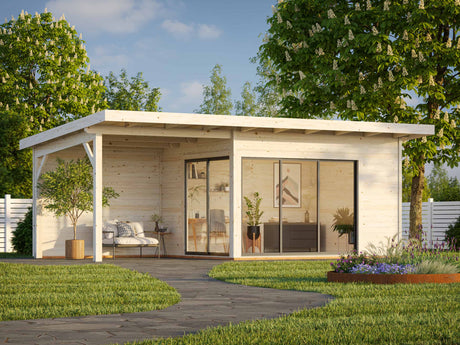
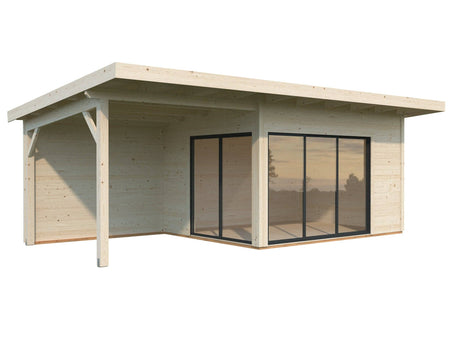
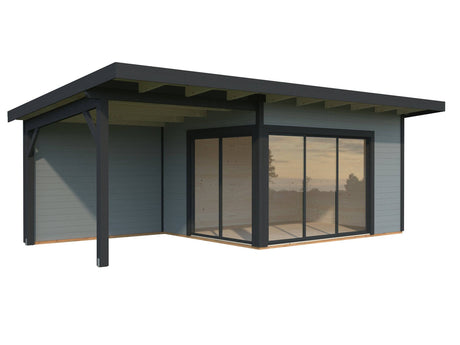
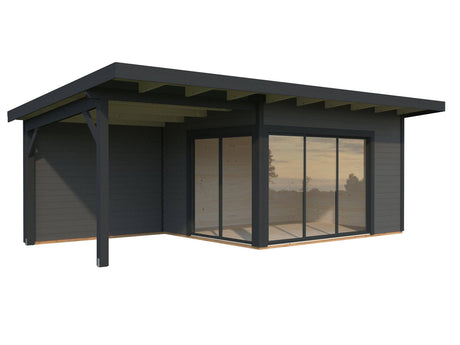
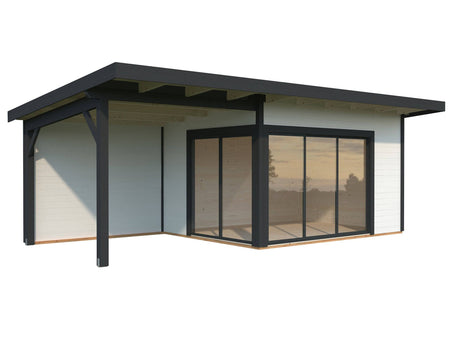
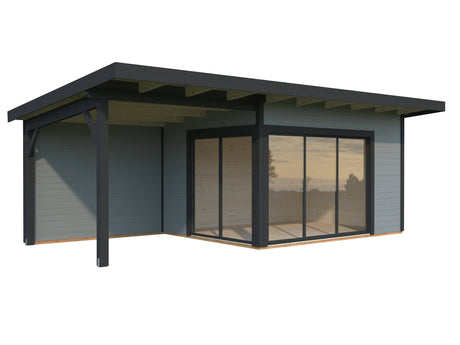
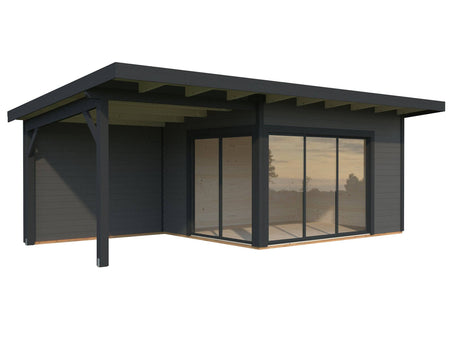
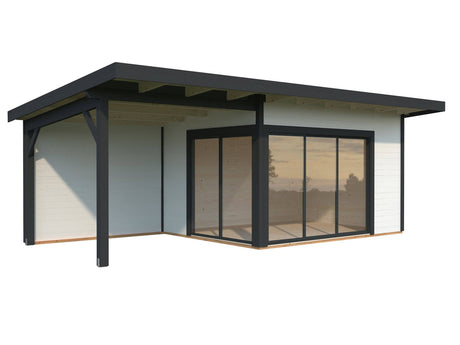
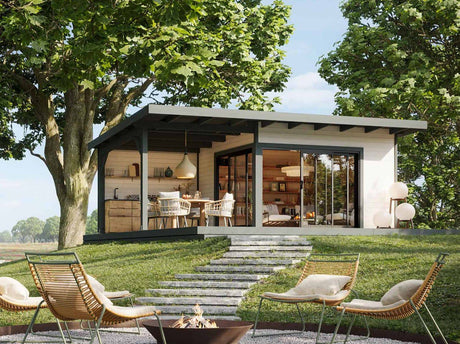
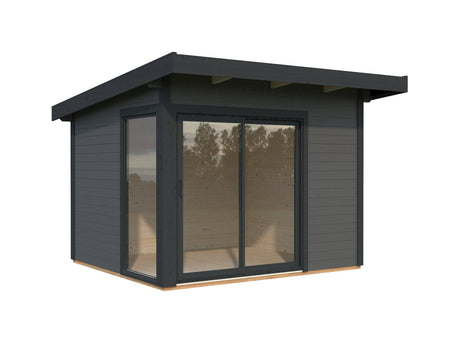
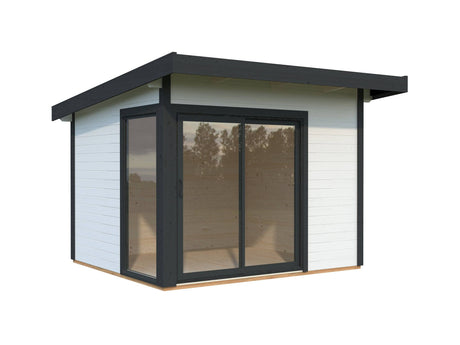
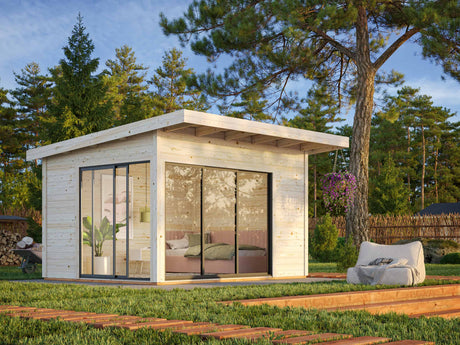
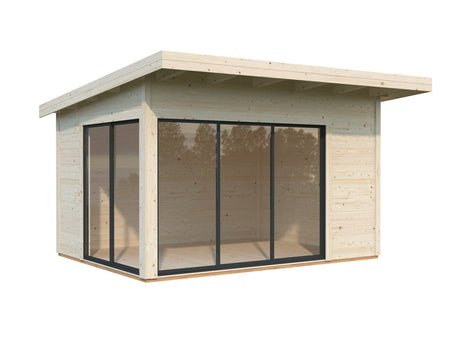
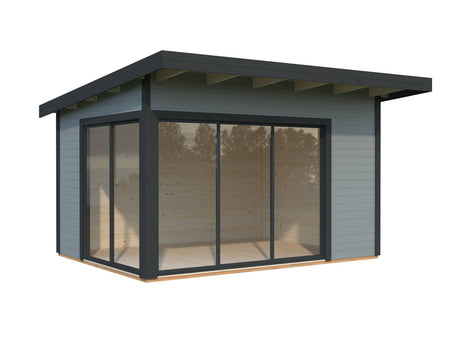
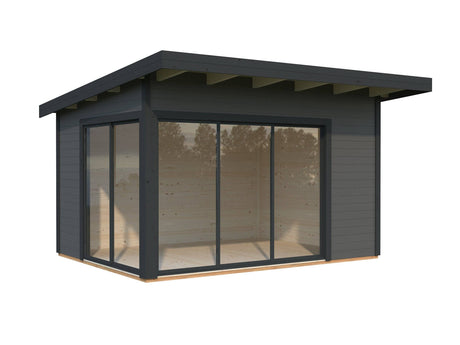
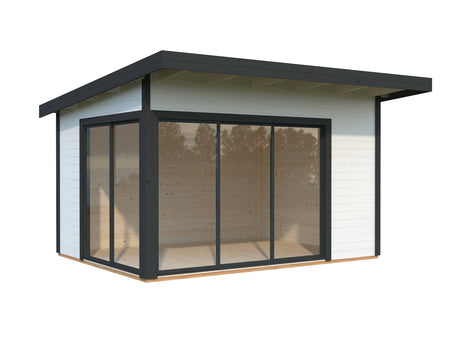
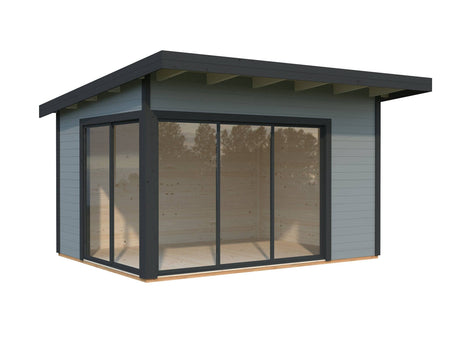
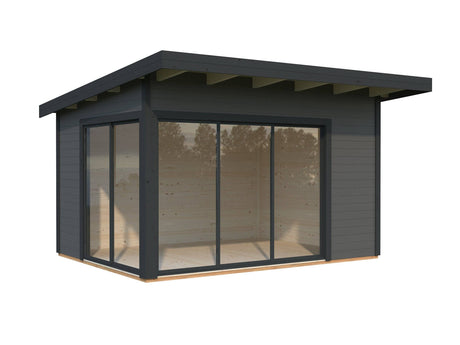
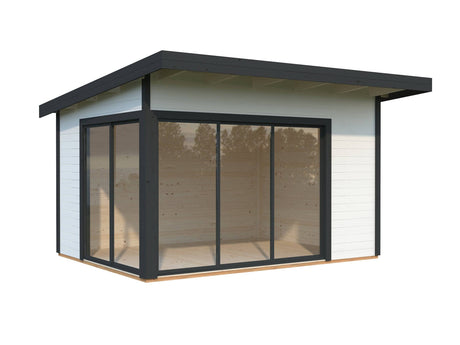
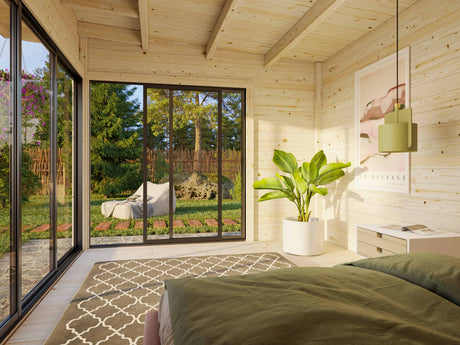
Prefabricated granny annexes are an affordable way to add extra living space in your garden. Assembled onsite, these high-quality timber structures are secure, durable, and modern. They provide all the necessary amenities characteristic of a granny annexe and qualify for permitted development rights because they’re under 2.5m at the eaves.
1. Nan’s Garden Retreat

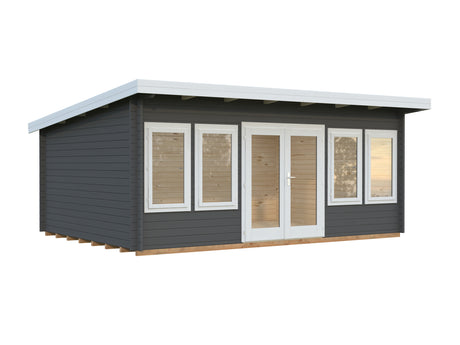
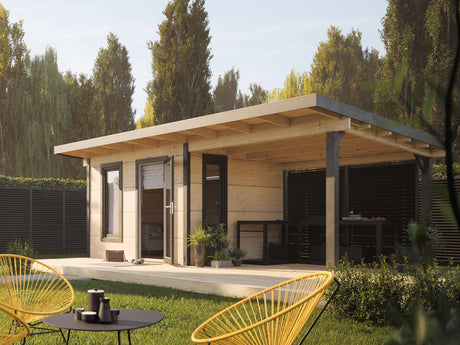
Nan’s garden retreat or Grandad’s garden home, either one is fine. This compact garden home is perfect for elderly relatives. With plenty of room for a bedroom, small bathroom, kitchenette, and living area, this modern timber cabin will surely make Nan (or Grandad, or both) very happy.
The four-room layout lends itself to zones: a restful bedroom, an accessible bathroom, and an open-plan living/kitchenette area (making everything within easy reach). Change the room configuration to suit your personal and space requirements by amending interior walls.
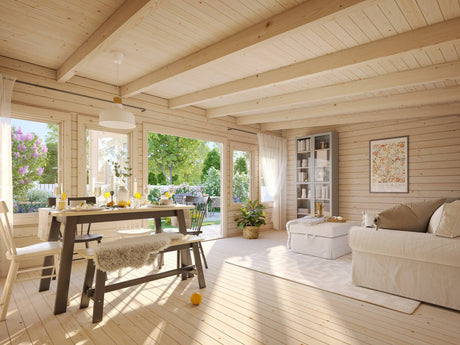
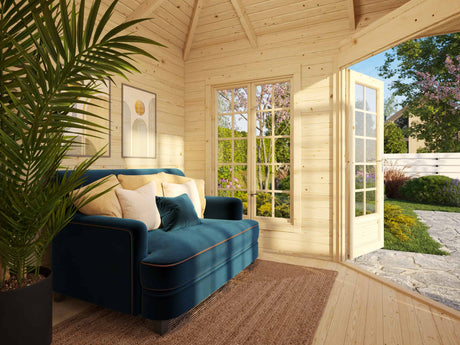
The aluminium doors and large windows let in plenty of light, giving the interior a bright, sunny look. The external veranda is the perfect place for morning and afternoon tea rituals with family, as well as for long reading sessions while enjoying the garden.
Considering this prefab granny annexe? Palmako’s multi-room cabins offer exceptional quality and design features - ideal for comfortable, safe, and accessible living spaces. 👉 Access the full catalogue
2. Traditional relaxed living

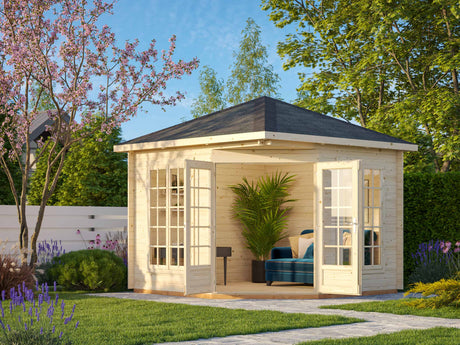
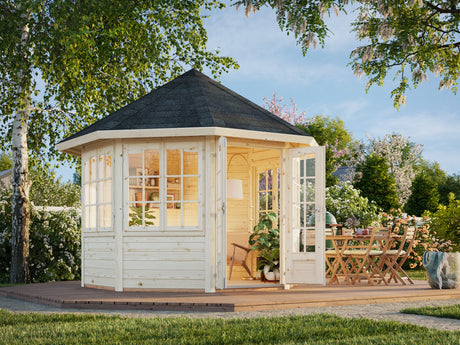
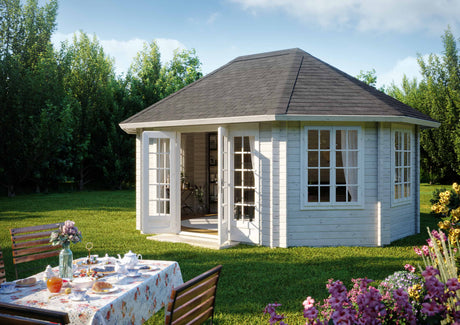
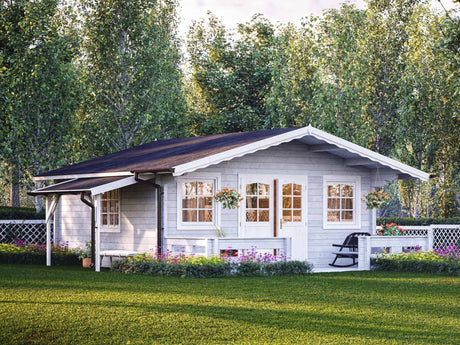
This design concept offers classic charm for the relative who prefers a traditional, village-like style. The pitched roof, veranda and painted wooden exterior give this cabin the comforting look of a country cottage.
With four separate rooms to play with, there’s plenty of room for a bedroom, small kitchen, living room, and bathroom. Extend the functionality of the veranda by placing a dining nook and potted herb plants. Interior walls can be amended to suit personal preferences or mobility issues. The large windows and doors provide a sunny and well-lit interior (safe for Gran and Grandad to navigate around).
Inside the generous front room, soft armchairs, bookcases, and a small coffee table. The central area, with its 6.2 m² footprint, provides ample space for a well-equipped kitchenette, while the bedroom can accommodate a double bed with space to move around it easily.
This cabin honours tradition while providing a comfortable, secure, and welcoming home.
Want to peek further into the specifications of this cabin? 👉 Access the full design features.
Final Thoughts
A granny annexe earns its title not by charm or nickname but by meeting a handful of clear criteria used across regional planning, housing, and tax rules. Underneath the charming ideas is a crisp definition of what qualifies and what doesn’t: A self-contained living space occupied by a dependent relative or close family member, with the occupier remaining part of the main household.
FAQs: What is a granny annexe?
1. Are granny annexes subject to Council Tax in the UK?
Each region within the United Kingdom has its own rules governing council tax. Therefore, it's best to check with your local Validation Agency (VOA). In 2026, most annexes fell under Band A council tax3. This is the lowest band of Council Tax payable in England, Scotland, and Wales. Northern Ireland uses a system of domestic rates calculated from a property’s capital value.
2. Do I need planning permission for a granny annexe?
Planning permission is required if the annexe is attached to the main residence, or it's a separate dwelling that is classified as a self-contained living unit (kitchen, bathroom, bedroom, living room). Some granny annexes (such as garden rooms) can be erected under permitted development rights, provided they comply with the stipulations.
3. Can I rent out the granny annexe I built for my elderly family members?
A granny annexe is classified as a separate dwelling, but for family members, such as elderly parents or grandparents. When you no longer have a dependent relative living there and want to rent it out, the rules and regulations change. You will need to apply for a change of use with the local authorities.
4. Will a two-story addition still qualify as a granny annexe?
If the addition is attached to the main house, it still classifies as a granny annexe, as long as a dependant family member will live there. The addition will require planning permission from your local planning authority. Hiring a planning expert to help with this project could be prudent, as misclassification of building additions can be costly.
5. Can I sell the granny annexure I built on my property?
An important aspect to consider when building a granny annexe is that it cannot be sold as a separate dwelling. While it may be some distance from the main building, it is still considered part of your property. However, a prefabricated granny annexe (such as a timber cabin) can be sold separately because it can be broken down and relocated.
6. Do I need a lawful development certificate when erecting a granny annexe?
Although it is not strictly required, a lawful development certificate confirms that the structure is not a separate dwelling, which simplifies the council tax you have to pay and planning permissions.
References:
1. Profile of the older population living in England and Wales in 2021 and changes since 2011
3. Council Tax: stock of properties statistical commentary - GOV.UK