

Reviewed by the Palmako UK content team with insights from our garden building experts.
The greenhouse isn’t just about gardening; it's a British icon, and there was a time when you’d be laughed off the property if you suggested anything but a glass greenhouse. But those days are gone, and gardeners are unashamedly exploring other options, like polycarbonate. Of course, glass traditionalists are raising their eyebrows at this, so we’re getting to the bottom of the polycarbonate or glass greenhouse debate.
At a Glance
A polycarbonate greenhouse is constructed from rigid, translucent polycarbonate thermoplastic panels, while a glass greenhouse is made from sheets of high-quality glass or toughened glass. These panels or sheets are inserted into a timber, metal, or PVC frame, giving the glasshouse its iconic shape.
Table of Contents
- What is polycarbonate?
- Why is polycarbonate an alternative to glass?
- Why choose a glass greenhouse?
- Why choose a polycarbonate greenhouse?
- Polycarbonate or glass greenhouse: Which one is better?
- Conclusion
- FAQs: Polycarbonate vs Glass Greenhouse
What is polycarbonate?

It is safe to assume that everyone knows what a glass panel is, but not so with polycarbonate material. Polycarbonate (polycarb) panels are transparent, lightweight and durable, known for their impact resistance. They look similar to glass sheets, but they are plastic. For this reason, they have at times been mistaken for polyethylene film, but this is a different, less durable material.
The polycarbonate sheets can be single-walled or multi-walled. The multiwalled panels feature internal honeycomb-like pockets, which are the most commonly used for greenhouses. The panels are extremely strong, sometimes up to 200-250 times stronger than glass, and offer a high light transmission. This makes them a good alternative to glass.
Why is polycarbonate an alternative to glass?
Standard horticultural glass has been the gold standard for UK greenhouses since it became a wealthy status symbol in the Victorian era, when botany was a popular pursuit, and plants were collected from all over the world. It was only when the industrial era made glass more affordable and accessible to the working middle class that it was widely used in domestic glass structures. [1]
This has gone on for decades, but the competition between polycarbonate and glass greenhouses is growing each year, and many home gardeners are still in the dark about why polycarbonate is a viable greenhouse option. Examining the differences between glass and polycarbonate is the best way to show why it is chosen as an alternative.
|
Glass |
Polycarbonate |
|
Excellent light transmission (allowing maximum light penetration). |
Excellent light diffusion (allowing light to scatter in multiple directions) |
|
Blocks 90%+ UVB rays but less than 75% of UVA rays (harmful UV radiation). |
Offers up to 100% UV protection with UV resistant coating. |
|
Moderate impact resistance (unless double glazing or toughened safety glass is used) |
It is virtually unbreakable (unlike glass), offering exceptional impact resistance. |
|
Traditional glass panels are heavier than plastic. |
Polycarbonate panels weigh around 50% less than the same-size glass panels. |
|
Double- or triple-glazing offers good insulation (R-value between 3.0 - 6.0). |
Polycarbonate glazing offers moderate insulation (R-value 1.4 - 3.0). |
|
Glass panels must be cut to size before installation, and are prone to breaking. |
Polycarbonate plastic sheeting can be sized on-site and is more flexible than glass. |
|
Offers high visual appeal but needs regular cleaning. |
Offers slightly less visibility than glass but only requires occasional cleaning. |
Why choose a glass greenhouse?

A glass greenhouse is the top choice when you want superior lighting, a beautiful aesthetic and longevity. Let’s not forget the emotional element for choosing a glass greenhouse - that centuries-long tradition so close to the British homeowner’s heart.
One reason clear glass has remained popular even when other materials are cheaper is the direct light transmission. Glass glazing excels at growing plants because it captures 85-90% of natural sunlight and retains heat during the day. This constant and relatively stable environment encourages photosynthesis, creating healthier plants and extending your growing season.
Longevity is another benefit that makes glass a compelling choice over other materials. With the proper care, it does not warp, yellow or lose transparency as it ages. The reason it remains crystal clear over many years is that it is not susceptible to UV degradation.
Heat-loving, high-yielding plants such as tomatoes, peppers, cucumbers, and eggplants thrive in a glass greenhouse. They are also good for Mediterranean herbs, delicate salads, and melons. Since these are the perfect crops for beginners because they are easy to grow, a glass greenhouse is the ideal starting point for greenhouse owners, even if it's small.
From an aesthetic perspective, glass cannot be beaten. It offers the timeless, classic greenhouse that so many people have come to love as part of British culture. It integrates well with both traditional and modern settings, serving as both a garden feature and a productive gardening space.
Finally, and perhaps most importantly, glass is an environmentally friendly option. It lasts for decades and does not degrade into harmful materials that harm the environment. When you no longer need your greenhouse, the glass can be easily recycled or reused for other building projects.
Insider tip: Don’t forget to lay a decent foundation for your glass greenhouse. Use either a concrete slab or concrete pavers to ensure that your greenhouse is level. A level greenhouse will not place unnecessary strain on the glass panels, increasing their longevity.
The benefits of a glass greenhouse are attractive and deserve careful consideration. There’s nothing like seeing a finished product up close, falling in love with it and then making your ideas a reality. You can get started by browsing the Palmako greenhouse collection and then calling one of their greenhouse experts.
Why choose a polycarbonate greenhouse?

A polycarbonate greenhouse is a better option for homeowners who want a cost-effective, lightweight greenhouse with moderate longevity. It is the modern alternative to the classic glass greenhouse, providing a similar aesthetic and experience.
Probably the biggest drawcard of polycarbonate greenhouses is their thermal insulation. Single-pane glass has little ability to trap heat, but polycarbonate twin-wall panels do this very well. This thermal barrier better modulates heat, providing an energy-efficient growing environment. At night and during cold winter months, this is particularly helpful for temperature-sensitive plants.
The next benefit is about impact resistance or safety. This is important for families with children, elderly family members and pets. Unlike glass, polycarbonate is shatterproof and can withstand hail and other adverse conditions that would normally shatter glass. This also makes the material easier to transport and install.
Light diffusion is a key reason to use polycarbonate panels rather than glass. Certain plants prefer scattered light rather than direct light. Potted plants, tropical houseplants, roses, ferns and young plants fall into this category.
Polycarbonate panels are much lighter than glass, especially larger glass panes. Because they are lightweight, they are easier to handle and install. This reduces the time required to set up the greenhouse and the installation costs.
Polycarbonate is a good alternative to glass because it offers properties some gardeners prefer and is a cost-effective option for most homeowners. However, plastic greenhouses aren’t for everyone, and glass greenhouses remain very popular. It could be said that some things are so part of our culture that they’re hard to give up, and the classic greenhouse is one of those things.
Polycarbonate or glass greenhouse: Which one is better?
After carefully examining the properties of each of these greenhouses, you can only make a decision based on your personal preferences, budget, what you want to grow, and how long you plan to use the greenhouse.
Both types of structures offer significant benefits for homeowners, and while the glass greenhouse is a firm favourite in the UK, it is no longer the only option. In light of this, the debate comes down to subjective experience. Some gardeners are firm traditionalists and glass greenhouses will always be their first choice, while others are willing to compromise on aesthetics for the sake of cost and safety.
For those who want a balance between traditional appearance and modern performance, a glass greenhouse remains a strong option, offering excellent light conditions for plants while maintaining a timeless and elegant garden feature.
Insider tip: Whatever your choice, opt for the highest-quality materials your budget allows. Even if you plan to build a bigger greenhouse when you gain more experience or want to experiment with different plants, an inferior-quality greenhouse will affect your gardening experience.
Conclusion
Glass greenhouses are preferred for their traditional aesthetic, longevity, direct light transmission, and environmentally sustainable nature. Polycarbonate greenhouses are preferred for their cost-effectiveness, thermal insulation properties, impact resistance and light diffusion.
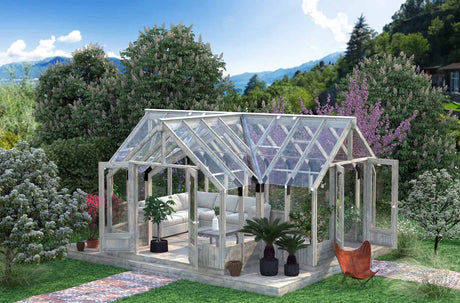
If you’ve come this far and remain a glass greenhouse enthusiast, you might like the Palmako Greenhouse Collection. The combination of high-quality Nordic spruce and large glass panels provides the ideal growing environment for your plants, vegetables and seedlings year-round.
Further greenhouse resources
-
Do you need planning permission for a greenhouse in the UK?
-
How to choose a greenhouse: A Guide for UK Buyers
- What to grow in a greenhouse for beginners
FAQs: Polycarbonate vs Glass Greenhouses
1. Glass vs polycarbonate, which one is better for a greenhouse?
A glass greenhouse is better when you need to prioritize natural light transmission, aesthetics, and longevity. It is not suitable for areas with extreme temperature fluctuations or frequent hail. A polycarbonate greenhouse is better when you want a high degree of safety, good insulation, durability in extreme weather and light diffusion.
2. Can greenhouse glass be easily replaced?
Yes, greenhouse glass can be easily replaced by moving the clips that hold it in place and carefully removing the glass. You can use either toughened glass, standard glass panes, or horticultural glass as replacements. Check with the greenhouse manufacturer to determine the best replacement option.
3. Does a polycarbonate or glass greenhouse last longer?
A glass greenhouse has a longer lifespan than a polycarbonate greenhouse. The glass greenhouse can last from 20 to 50 years, whereas the polycarbonate greenhouse will last 10 to 25 years. Glass does not degrade, is scratch-resistant and is durable under most conditions. However, under extreme weather conditions such as large hail, gale-force winds, and falling trees, even a glass greenhouse will need repair work.
4. When is a twin-wall polycarbonate greenhouse better than a glass greenhouse?
A twin-walled polycarbonate greenhouse is better for year-round plant growth that benefits from light diffusion, and when heat retention is needed. Polycarbonate greenhouses are considered safer because the panels are virtually unbreakable, making them more suitable for families with children and pets. They are also better for gardeners who prefer larger panels, as they are lighter than double-glazed glass.
5. Does polycarbonate greenhouse glazing go yellow over time?
Yes, polycarbonate does discolour over time, usually between 8 and 10 years with a UV-resistant treatment and between 5 and 7 years when it is not treated. Over time, UV radiation causes the material to degrade through molecular breakdown, which gives it its yellow colour.
References:
1. A brief history of the greenhouse